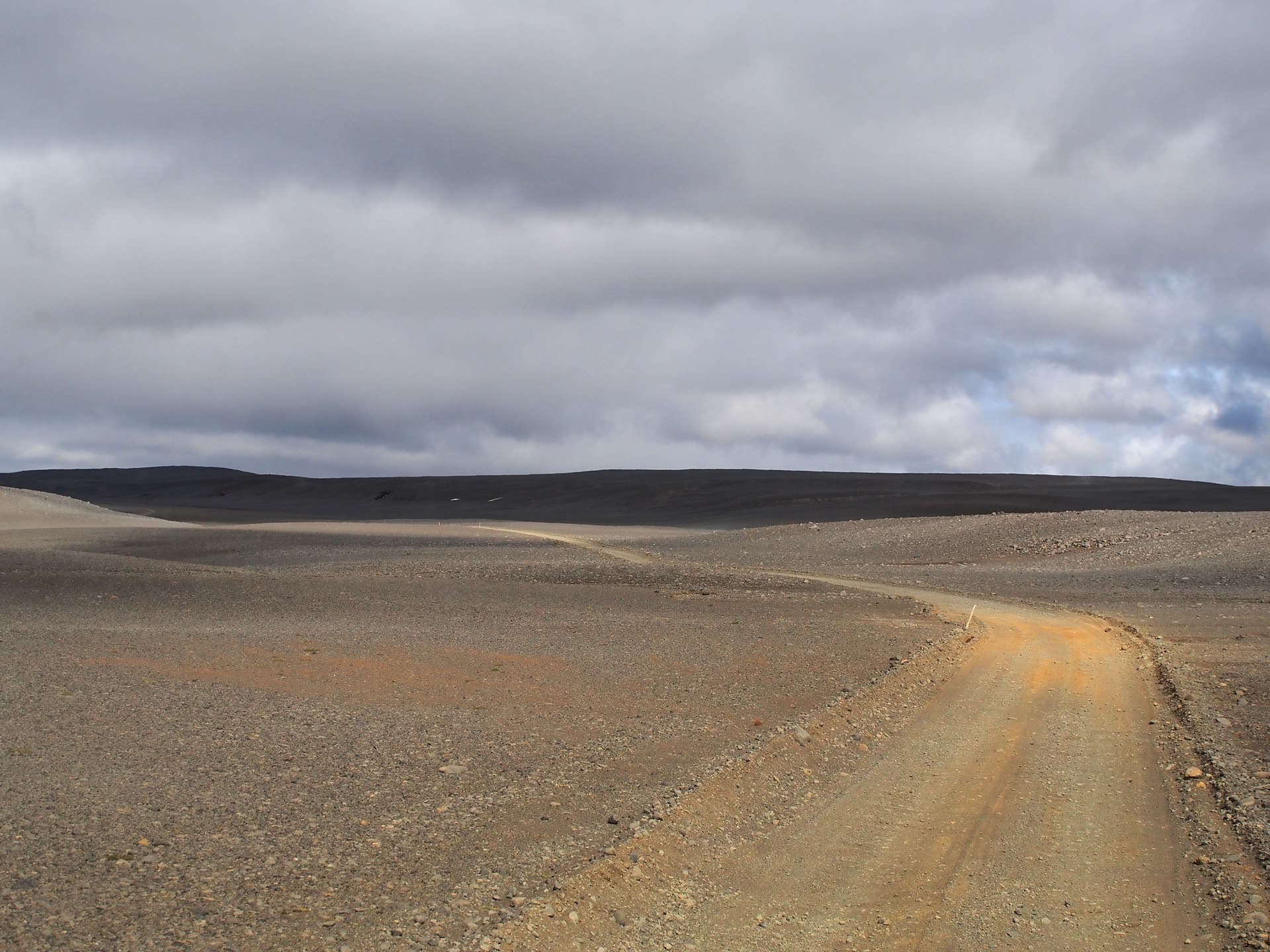
Iceland is best explored by car. The freedom to pull over at a waterfall or chase the Northern Lights on a whim is what makes a self-drive trip unforgettable. But Iceland's roads range from smooth highways to remote Highland tracks that require a 4WD and careful preparation. This guide covers what every driver needs to know.
Road types in Iceland
The Ring Road (Route 1) circles the entire island and is mostly paved. It's accessible with a standard 2WD car year-round, though winter sections require extra caution. Secondary roads are often unpaved gravel — driveable in a small car but slower.
F-roads are mountain interior roads, marked with an "F" prefix on maps. They cross the Highlands and reach Iceland's most remote destinations. F-roads are only open from mid-June to September and require a high-clearance 4WD vehicle. Attempting them in a 2WD is illegal and immediately voids your rental insurance.
F-roads and the Highlands
The Highlands are Iceland's most dramatic interior — vast lava deserts, active geothermal areas and remote mountain rifts. Getting there requires an F-road. All F-roads are unpaved, many cross rivers without bridges, and conditions can change rapidly.
- •F35 Kjölur Route — the easiest Highland crossing, no major river fords, opens early June
- •F208 Landmannalaugar (north approach) — moderate difficulty, minor crossings, opens mid-June
- •F88 Askja Route — serious river crossings including the Lindaá, opens late June
- •F26 Sprengisandur — a 200 km lava desert crossing, challenging, opens July
- •F249 Þórsmörk — multiple glacial rivers, difficult, opens late June
River crossing safety
Many F-roads cross glacial rivers with no bridge. Glacial rivers run faster in the afternoon due to snowmelt — morning crossings are safer. The current can be deceptively powerful.
- •Always stop and walk the crossing before driving — check depth and current
- •Cross at the widest point of the river, which is usually the shallowest
- •Use low range 4WD, maintain a slow steady speed — do not stop mid-crossing
- •If your engine stalls, do not restart immediately — water may enter the exhaust
- •When in doubt, turn around. No destination is worth a stranded or flooded vehicle
Vehicle requirements
Rental companies in Iceland offer a wide range of vehicles from city cars to expedition-spec Land Cruisers. Choosing the right vehicle depends entirely on where you plan to drive.
- •City car / small 2WD — Ring Road and paved roads only. Cannot access F-roads.
- •Small 4WD SUV (Dacia Duster, Toyota RAV4) — suitable for most F-roads with care
- •Large 4WD (Land Cruiser, Ford Ranger) — suitable for all F-roads including major river crossings
- •Standard campervan — Ring Road only; never permitted on F-roads
- •4WD campervan — most F-roads, but confirm clearance and river policies with your rental company
Driving rules and safety
Iceland drives on the right. Headlights are legally required at all times, even in summer daylight. Speed limits are strictly enforced with cameras throughout the country.
- •Speed limits: 50 km/h in towns, 80 km/h on gravel roads, 90 km/h on paved highways
- •Seatbelts are mandatory for all passengers
- •Mobile phones must not be used while driving
- •Sheep roam freely — slow down in rural areas and expect animals on roads
- •Register your trip at safetravel.is before entering the Highlands