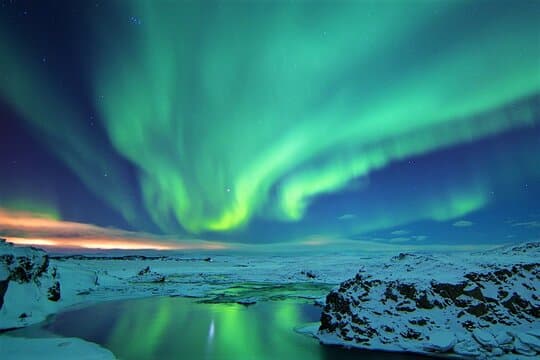
Northern Lights in Iceland

Northern Lights in Iceland

6 min read

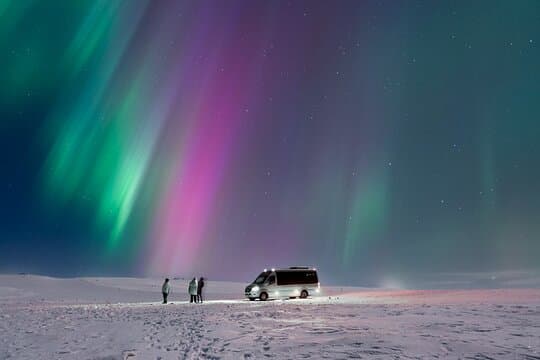
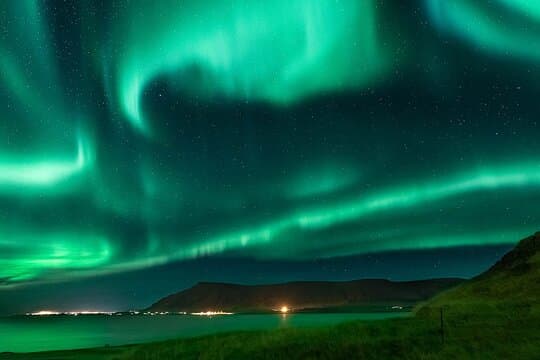
The Aurora Borealis is one of the most sought-after natural experiences on earth — and Iceland is one of the best places on the planet to see it. But northern lights require the right conditions: darkness, solar activity and clear skies. This guide gives you everything you need to maximise your chances.

Aurora season

The Northern Lights are visible in Iceland from late August to mid-April — any time when the nights are long enough to create true darkness. The core season is October to February, when you get 10–18 hours of darkness per night.

Summer (June–August) is aurora-free: Iceland's midnight sun means there is no astronomical darkness. If seeing the Northern Lights is a priority, plan your trip between October and March.

  • Best months: October, November, January, February
  • Good months: September, March
  • Possible: August (late), April (early)
  • Impossible: May, June, July

Understanding the KP index

The KP index (0–9) measures geomagnetic storm activity. The higher the KP, the more active and visible the aurora. In Iceland, you typically need KP 2 or above to see the aurora. KP 4 or above gives a vivid display across a large part of the sky.

Track tonight's forecast at aurora.vedur.is — Iceland's own aurora forecast service. Cloud cover is often more of a limiting factor than the KP index. Clear skies with a KP of 2 will beat a stormy KP of 8.

Check both aurora.vedur.is (KP forecast) and vedur.is (weather/cloud cover) on the same evening. A clear night with moderate solar activity beats a high KP under thick cloud.

Best viewing locations

Get away from city light pollution. Even 30 minutes outside Reykjavík dramatically improves your chances. Iceland's dark skies — and reflective landscapes — make it ideal aurora territory.

  • Þingvellir National Park — dark skies, 45 min from Reykjavík, dramatic rift valley backdrop
  • Jökulsárlón Glacier Lagoon — icebergs reflect the aurora for extraordinary photographs
  • Kirkjufell, Snæfellsnes — Iceland's most photographed mountain, iconic aurora backdrop
  • Reynisfjara, South Coast — black sand beach against sea stack silhouettes
  • Lake Mývatn, North Iceland — geothermal landscape with some of Iceland's darkest skies
  • Landmannalaugar Highlands — remote highland setting; summer access only (F-road)

Photography basics

You do not need professional equipment to photograph the aurora — a modern smartphone on night mode or a basic DSLR with manual controls will work well. The key requirements are: a tripod, manual settings and patience.

  • Shoot in RAW format if your camera supports it
  • Use the widest aperture available (f/1.8–f/2.8 ideal)
  • ISO 800–3200 depending on aurora brightness
  • Shutter speed 5–20 seconds (shorter for fast-moving aurora)
  • Manual focus on a bright star or distant lights
  • Spare batteries — cold drains batteries fast

Recommended tours

Frequently asked questions

What months can I see the Northern Lights in Iceland?
The aurora is visible from late August to mid-April. October to February gives the longest dark windows and statistically the best chances.
Is the Northern Lights guaranteed?
No. Aurora visibility depends on solar activity, clear skies and darkness. You can improve your odds by staying multiple nights, travelling outside the city and checking forecasts — but it is never guaranteed.
How do I check if the Northern Lights will be visible tonight?
Use aurora.vedur.is for Iceland's own aurora forecast, which combines KP predictions with cloud cover maps for the whole country.
Can I see the Northern Lights from Reykjavík?
Light pollution makes city viewing poor. You can sometimes see bright aurora from Reykjavík's outskirts, but driving 30–60 minutes outside the city makes a significant difference.
Should I book a guided Northern Lights tour?
Guided tours are worth considering — experienced guides track forecasts in real time and know where to chase clear skies. They are especially valuable on short trips where you only have one or two nights to try.

Related guides